
Do Heat Pumps Actually Work in Maryland Winters?

Key takeaway: Heat pumps work in Maryland winters, and the bad reputation is a real memory of genuinely poor equipment. Single stage compressors of the 1980s and 1990s made the same fixed output at every outdoor temperature, mercury thermostats energized strip heat whenever the room fell behind, and defrost boards ran on a timer whether frost was present or not. Inverter driven variable capacity compressors and demand defrost changed all three. The ENERGY STAR cold climate designation is a measured test at 5 degrees Fahrenheit, requiring a COP of at least 1.75 and at least 70 percent of 47 degree capacity at that point, while the winter design temperature across Prince George's County sits in the teens, roughly ten degrees warmer than the test. Expect warm air rather than hot air at the registers, long steady run times, and a few minutes of visible steam during defrost. The three things that actually ruin a heat pump in a Maryland winter are oversizing, backup heat left unlocked, and a thermostat running furnace recovery logic. TerraStream Energy sizes a system off a Manual J load calculation and the manufacturer's capacity at the Maryland design temperature, then sets the lockouts and staging at startup, because the hardware is rarely what fails here.
Where the Winter Reputation Came From
What Single Stage Equipment Did in the Cold
The heat pumps that earned the technology its bad winter name ran at one fixed speed, and that speed was chosen for a mild day rather than a cold one.
A single stage compressor has two states. Off, and all the way on. Pick any outdoor temperature you like and the machine makes exactly the same effort. What changes is how much heat is out there to collect. At 45 degrees outside, a single stage unit sized for the house's cooling load had capacity to spare and satisfied the thermostat quickly. At 25 degrees it had a fraction of that output while the house was losing heat twice as fast. Something had to cover the difference, and in a 1980s install that something was a bank of electric resistance coils sitting in the air handler.
Resistance heat is the most expensive heat in a house. It converts one unit of electricity into one unit of heat and cannot do better than that by any arrangement of parts. A compressor beats it by a wide margin at any temperature a Maryland winter produces. The old equipment handed the job to the coils anyway, for hours at a stretch, and it began doing so at outdoor temperatures that were not actually cold.
Sizing practice made it worse. The common approach was to pick the unit off the cooling load and treat heating as whatever happened to come along with it, then let strip heat absorb the shortfall. Nobody calculated where the shortfall began. Homeowners experienced a system that did fine in November and seemed to quit in January. They were right about what they saw. They were wrong about the cause.
Crude Controls and a Reputation That Stuck
The controls on an early heat pump did as much damage as the compressor did, and the thermostat was the worst offender in the whole system.
A mercury bulb thermostat has no concept of a heat pump. It knows the room is below setpoint and it closes contacts. Once the room drifted a couple of degrees behind, the second set of contacts closed too and the strip heat came on alongside the compressor. There was no outdoor sensor telling it that 38 degrees outside is a temperature the compressor can handle alone. There was no staging logic, no delay, no lockout. A homeowner who set the thermostat back eight degrees overnight and pushed it up in the morning got the entire resistance bank for the better part of an hour, every single day of the winter.
Defrost control was equally blunt. Early boards worked on time and temperature. After a set interval of compressor run time, 30 or 60 or 90 minutes depending on how the board was jumpered, the control looked at a coil sensor and, if the coil was cold, ran a defrost. Whether frost was actually present had nothing to do with it. Every one of those cycles reversed the system into cooling for several minutes and fired strip heat indoors to keep the supply air from going frigid. Half of them were unnecessary. The homeowner felt each one.
The equipment that created this reputation has been in a scrapyard for twenty years and the opinion is still at the kitchen table when a quote gets presented. Nothing in the industry separated the two eras. The same two words, heat pump, describe a 1988 single stage unit with a timer board and a 2026 inverter driven machine with demand defrost and published low temperature capacity. A homeowner in Bowie or Hyattsville who remembers a parent's house being cold has no way to know those are different animals.
There is a harder reason the objection survives. New heat pumps still fail in exactly the ways people remember, and they fail for install reasons rather than technology reasons. Oversize a modern unit, leave the strip heat unlocked, hang a thermostat that was configured like a furnace thermostat, and the homeowner gets the 1988 experience out of 2026 equipment. The objection keeps finding fresh evidence. That is what makes it durable.
What Actually Changed in the Equipment
Inverter Driven Variable Capacity Compressors
An inverter driven compressor sets its own speed, which lets one machine behave like a small system in October and a large one in January.
The inverter varies the frequency of the power going to the compressor motor, so speed is continuous between a minimum and a maximum instead of being a choice between off and full. Two things follow from that. The unit can be selected with real capacity in reserve for the coldest part of the season without becoming hopelessly oversized for a 50 degree afternoon, since it simply turns down. And many of these compressors can run above their nominal speed when it is cold, pulling more capacity out of the same box at the moment the house needs it most.
This is the point where the term COP starts to matter. Coefficient of performance is the heat a system delivers divided by the energy it consumes, both counted in the same units. Resistance heat sits at 1.0 and always will. A compressor moving heat rather than creating it lands well above 1.0, and how far above depends mostly on the outdoor temperature it is working against. The whole cold weather argument is really an argument about what that number does as the thermometer falls, and modern equipment holds it up much further down the scale than the old stuff did. The Department of Energy ran a Residential Cold Climate Heat Pump Challenge with manufacturers specifically to push low temperature performance, which tells you where the engineering attention went.
Defrost That Runs on Demand
Current defrost logic decides whether frost is on the coil instead of defrosting on a clock.
Frost is unavoidable and it is not a malfunction. In heating, the outdoor coil has to run colder than the outdoor air in order to absorb heat from it, which means on a 35 degree morning that coil is below freezing. Moisture in the air condenses on the fins and freezes there. A layer of frost insulates the coil and chokes the airflow through it, and capacity drops until it comes off.
Demand defrost watches the gap between the coil temperature and the outdoor air temperature. A clean coil holds a predictable spread. As frost builds, that spread widens, and when it widens past the threshold the board calls a defrost. The cycle then ends on coil temperature, when the sensor says the coil is clear, rather than running out a fixed number of minutes. Fewer cycles, shorter cycles, and less resistance heat burned covering for them. On a dry cold day a modern unit may go a long stretch without needing one at all, which a timer board could never do.
Capacity Tables Instead of a Sales Claim
Whether a specific heat pump covers a specific Maryland house at 17 degrees outside has a published answer, and it lives in the manufacturer's extended performance data.
Nominal tonnage is a rating at one condition. A three ton heat pump makes roughly 36,000 BTU per hour of heat at 47 degrees outdoor air, and that figure is a label rather than a constant. The extended performance tables are where the real numbers are. Rows for outdoor temperature running down to zero and sometimes below, columns for indoor airflow and compressor speed, and in each cell the heating capacity and the power input at that condition. Run your finger down to the Maryland design row and the question answers itself. The AHRI certified product listings give you the matched outdoor and indoor combination the ratings apply to, which matters because capacity belongs to the pair and not to the outdoor unit alone.
That table is also the only honest way to arrive at a balance point. Balance point is the outdoor temperature at which the heat your house loses equals the heat the selected unit can deliver. Above it the compressor carries the house by itself. Below it there is a gap, and backup heat exists to fill that gap and nothing more. A contractor who cannot show you the capacity at your design temperature cannot tell you where your balance point is, which means the backup heat is being sized by guess.
TerraStream Energy installs Daikin and Goodman equipment, and both lines publish extended performance data down into low outdoor temperatures. That is a deliberate reason to narrow to two manufacturers rather than a preference. A table that stops at 47 degrees is useless for answering a winter question, and crews who set the same two product lines repeatedly commission them correctly.
System behavior | Single stage unit of the 1980s and 1990s | Modern inverter driven heat pump |
|---|---|---|
Compressor speed | Off or full output, nothing between | Continuously variable between a minimum and a maximum |
Behavior on a mild day | Short bursts of full capacity, then long off periods | Turns down and runs at low speed for long stretches |
Capacity as it gets cold | Falls steeply below freezing with no reserve | Falls more slowly, and many units can over-speed in cold |
Defrost trigger | Fixed run time interval plus a coil sensor check | Measured spread between coil and outdoor air temperature |
Backup heat control | Energized whenever the room fell behind setpoint | Staged, with an outdoor lockout temperature and a delay |
Low temperature data | Rated at 47 degrees, little published below that | Extended tables down to zero degrees and sometimes lower |
What changed between an early heat pump and a modern inverter driven system
The Cold Climate Evidence and Where Maryland Sits
What the Cold Climate Certification Tests
The ENERGY STAR cold climate designation is a measured result at 5 degrees Fahrenheit, not a marketing phrase a manufacturer can self assign.
To carry the designation, the ENERGY STAR key product criteria require a heat pump to demonstrate a COP of at least 1.75 at 5 degrees Fahrenheit and to deliver at least 70 percent of its 47 degree heating capacity at that same 5 degrees. Both numbers come out of a defined laboratory test procedure. Put the first one in plain terms. At 5 degrees outside, with the coil working against air far below freezing, the unit is still returning at least 1.75 units of heat for every unit of electricity it draws. That is 75 percent more heat than resistance coils would give you for the same electricity, under test conditions colder than almost anything Maryland sees.
The second number is the one contractors care about. Holding 70 percent of your 47 degree capacity at 5 degrees is what makes a balance point calculation come out somewhere reasonable. Older equipment fell far below that and the gap had to be covered by strip heat for a large share of the season.
One caution about certification, and it runs through the rest of this article. The designation describes what the equipment did on a test stand. It says nothing about whether the unit in your yard was sized to your house or whether its controls were set up correctly. ENERGY STAR's own guidance for air source heat pumps treats sizing and installation as part of the outcome, not a detail after the fact.
Maryland Design Temperatures and the Hours That Matter
Maryland's winter design temperature sits in the teens, which is well above the 5 degree point the cold climate test uses.
Design temperature is a specific thing, not a record low. It is the outdoor condition a load calculation sizes equipment against, chosen so that only about one percent of winter hours fall below it. ASHRAE compiles the climatic design conditions for thousands of locations and publishes them through its Weather Data Center, and residential load calculations draw their design conditions from that data. For Prince George's County the winter design figure lands in the teens. Upper Marlboro, Bowie, Laurel, Clinton, Fort Washington, Beltsville and Accokeek are all working from essentially the same condition, and so are Anne Arundel and Charles counties next door.
Line that up against the certification. The test point is 5 degrees. The temperature your system actually has to carry the house at, on the coldest reasonable morning of the year, is about ten degrees warmer than that. A cold climate rated unit selected for a Maryland house is not operating at the edge of its ability in January. It has margin, and the published capacity table will show you how much.
Mornings colder than design happen. A few per decade, usually with wind behind them. Backup heat covers those, which is the entire reason backup heat exists. Those mornings are not an argument for keeping a gas furnace, and they are not an argument for a bigger heat pump either.
Almost none of a Maryland heating season happens anywhere near design conditions. The bulk of the run hours between November and March fall between the high twenties and the low fifties. That is the range where a variable capacity machine is at its best, turning down to a low speed and running steadily with a COP comfortably above anything resistance heat can reach. The conversation at the kitchen table is always about the coldest morning. The bill is set by the thousands of mild hours nobody argues about. EIA's Residential Energy Consumption Survey puts space heating as the largest end use of energy in American homes, and most of that energy gets spent in the middle of the temperature range rather than at the extremes.
This is also where single stage and variable capacity part company most sharply. A single stage unit at 45 degrees outside is enormously oversized for the moment, so it runs briefly and stops, over and over. Every start has a cost, because coil and air temperatures take time to reach steady state and the first minutes of a cycle are the least efficient ones. An inverter unit in the same conditions just idles along at a fraction of its capacity. Same house, same day, very different behavior.

What You Will Physically Notice
Warm Air, Long Runs, and a Quieter House
The air at your registers will be cooler than your furnace's was, and that is the most common reason a correctly working heat pump gets reported as broken in its first winter.
A gas furnace burns fuel in a heat exchanger and dumps that heat into the air in one pass, which produces a supply temperature clearly hot to the back of your hand. A heat pump works the other way around. It moves a larger volume of air across a smaller temperature rise. The heat arriving in the room over an hour can be identical. The sensation at the register is not. Air that is a little above body temperature reads as neutral, and air moving across skin reads as cool even when it is warmer than the room.
Homeowners discover this by standing at a register on the first cold night, which is the worst possible test. The thermostat holding its setpoint is the evidence that matters. The register is a sensation, and your hand is a bad instrument for it. People who are told about this in advance stop noticing within a couple of weeks. People who are not told spend the winter convinced something is wrong.
The run pattern changes too. A furnace is loud and intermittent. It starts, gets hot, overshoots the setpoint, stops, and the house drifts down a degree before it fires again. Twenty years of that teaches you silence means satisfied. A heat pump breaks the lesson. It runs nearly continuously at a low speed, holds a tighter band around the setpoint, keeps less temperature difference between the first floor and the second, and makes less noise doing it.
The complaint that follows is predictable. It never shuts off. Run time and energy use are not the same thing, though. A compressor at a third of its speed draws a small fraction of the power it pulls at full tilt, and a long steady run is cheaper than the same heat delivered in hard bursts. Short cycling is what costs money. A system that never seems to stop in January was usually sized right.
The Defrost Cycle and the Steam
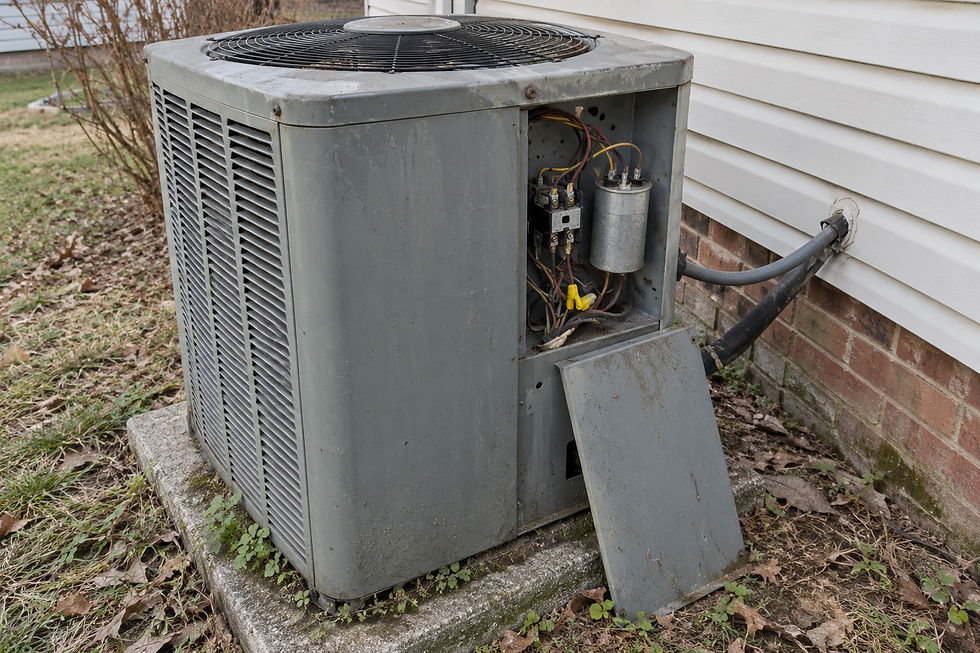
Several times on a damp winter day the outdoor unit will pause, make an unfamiliar sound, and send a cloud of vapor off the top of the cabinet, and every part of that is normal.
Here is the sequence. The reversing valve shifts and the system runs momentarily in cooling. The outdoor fan stops, which is why the usual hum disappears. Hot refrigerant goes out to the outdoor coil and the frost melts off it, the water runs down through the base pan onto the pad, and what hits the cold air above the unit looks like steam. Indoors, the control energizes a stage of backup heat so the supply air does not go cold while the system is running backward. The whole thing takes a few minutes and ends when the coil sensor says the coil is clear. The unfamiliar whoosh at the start and finish is the reversing valve moving and the pressures equalizing.
Some things are not normal, and they are worth knowing so you can tell the difference. A solid block of ice encasing the coil or filling the base pan for days. Defrost cycles every fifteen minutes. Or a coil white with frost and no defrost happening at all. Those point to a sensor, a drainage path, or a control setting rather than a failed compressor, and the contractor who installed the system is the one to raise them with.
The Three Install Mistakes That Cause Real Failures
Oversizing the Equipment
Oversizing does more damage to winter heat pump performance than any other single decision, and it almost always comes from a sizing shortcut rather than bad intent.
It arrives three ways. Carrying the old furnace nameplate forward, which bakes in whatever oversizing that furnace already had. Sizing to the coldest morning anyone can remember instead of to the design temperature. Or rounding up a half ton to be safe, which is the most common one and the hardest to argue a customer out of.
The cost shows up as cycling. An oversized inverter unit spends the entire shoulder season pinned at its minimum speed and still making more heat than the house is losing, so it has to stop and start anyway. The modulation you paid for never gets used. In cooling the same mistake produces a house that reads 72 degrees in August and still feels damp, because the unit satisfies the thermostat before it has run long enough to pull moisture out of the air. Oversizing also does not buy the cold weather margin people think it buys, since it shifts the balance point by less than the lost part load performance costs you across the hundreds of mild hours.
Manual J is the fix and there is no substitute for it. It is the residential load calculation standard published by the Air Conditioning Contractors of America and recognized as an ANSI standard, worked room by room off actual wall, window, ceiling and air leakage assemblies, and it produces a heating load and a cooling load that belong to your house. ACCA publishes the technical manuals that define the method along with Manual S for equipment selection. TerraStream Energy sizes a system off that calculation rather than off the nameplate on the appliance being removed.
Backup Heat Left Unlocked
Electric backup heat allowed to run any time the thermostat feels behind will turn a good heat pump into an expensive electric furnace.
Strip heat is resistance heat, so its COP is 1.0 by definition. Every hour it runs at an outdoor temperature the compressor could have handled is money spent for no reason. Four settings decide whether that happens. The outdoor lockout temperature above which auxiliary heat is simply not permitted to energize. How far the room is allowed to fall behind setpoint before auxiliary is called. Whether auxiliary runs alongside the compressor or in place of it. And whether the emergency heat selection has been left on at the thermostat, which locks the compressor out entirely and heats the house on coils alone.
Sizing matters here too. A backup heat kit sized to the whole design heating load, rather than to the gap above the balance point, is both a larger electrical load than the house needs and a bigger temptation for a sloppy control setup. A kit matched to the real gap is smaller, cheaper to run when it does run, and in plenty of houses it is the difference between needing a service upgrade and not needing one.
The symptom a homeowner notices is a January electric bill far above anything described during the sale, with a system that appears to be working perfectly. It is working. It is just working with the wrong heat source for most of the hours.
A Thermostat Running Furnace Logic
The third mistake is a thermostat configured the way a furnace thermostat is configured, which punishes a heat pump every morning the house asks for recovery.
Deep overnight setbacks suit a furnace. It recovers by brute force, 40,000 or 80,000 BTU per hour arriving the moment it fires, so a six degree climb takes very little time. A heat pump recovers slowly and deliberately at low speed. A thermostat set up for furnace recovery reads that slow climb as a system falling behind and calls auxiliary heat to help, every single morning, which hands the most expensive hour of the day to the resistance coils. Adaptive recovery features make it worse when they are left on with an aggressive ramp. Worse still is a heat pump wired to a thermostat that has no heat pump mode at all, with no staging configuration and nowhere to enter a lockout temperature.
What works is dull. Shallow setbacks or none. The thermostat configured in heat pump mode so it understands staging. An outdoor lockout entered for auxiliary heat, matched to the balance point the capacity table produced. A differential wide enough that a normal slow recovery does not trip auxiliary. These are menu settings, they take a technician twenty minutes at startup, and they are skipped constantly.
Notice what all three of these have in common. None of them is the equipment. An inverter heat pump that holds a COP above 1.75 at 5 degrees on a test stand will still disappoint a homeowner in Largo or Greenbelt if it was sized a half ton large, wired to an unlocked strip heat kit, and run by a thermostat that thinks it is operating a furnace. The hardware is rarely the thing that fails in a Maryland winter. The sizing and the controls are.
"The cold weather complaint I hear almost never traces back to the compressor. It traces back to a unit that was sized off the old furnace, a strip heat kit nobody locked out, and a thermostat set up the way you would set up a furnace. Fix those three things and the Maryland winter stops being the problem." Jake Mazzoccoli, Owner, TerraStream Energy
How TerraStream Energy Would Approach This
What Happens Before Any Equipment Is Named
The cold weather question gets answered with two numbers from your house and one table from the manufacturer, and all three come before a model number does.
The survey comes first and it covers the whole house rather than the furnace. Room by room measurements for the load calculation. Panel cover off to read the main breaker and count the open spaces. Static pressure read across the existing air handler, since airflow the house cannot deliver caps what any heat pump can do there. Where an outdoor unit can sit with clearance, a riser to keep it out of standing snow and water, and somewhere for defrost water to go.
TerraStream Energy runs the Manual J before selecting equipment, then pulls the capacity at the Prince George's County design temperature out of the manufacturer's extended table, states the balance point in writing, and sizes the backup heat to the gap above it. If a house turns out to be a poor candidate, that is a finding worth paying for rather than a problem to design around.
TerraStream Energy converts gas and oil heated homes onto electric heat pumps, and that electrification work is the center of the business rather than an add on to equipment sales. TerraStream Energy also replaces an aging furnace and air conditioner with a new high efficiency system when the house or the budget points that way. Both paths get the same load calculation. The difference is what comes out of the basement at the end.
Setting the Controls at Startup
Commissioning is where the cold weather objection is won or lost, and done properly it takes longer than hanging the equipment did.
TerraStream Energy sets the auxiliary heat lockout temperature off the calculated balance point, configures the thermostat in heat pump mode with its staging and differentials entered rather than left at factory defaults, and verifies that auxiliary heat is not wired to energize with every call. TerraStream Energy measures airflow and static pressure across the air handler at startup, records the temperature rise, and leaves those readings with the homeowner. Terms get defined at that visit too, so you know what a balance point is, what dual fuel would have meant, which is keeping the gas furnace as the backup below a set outdoor temperature, and why HSPF2 cannot be compared against the AFUE number on your old furnace, since one counts electricity and the other counts gas burned.
What you should end up holding is paper. The Manual J output. The AHRI matched combination. Capacity at the design temperature, the balance point, the backup heat strategy, and the thermostat settings as they were left. A homeowner with that packet can answer the cold weather question themselves, which is the point of producing it.
Incentive programs for heating equipment change from year to year and so do the federal rules around them. The Maryland Energy Administration lists current residential programs, and the terms there should be confirmed before any of it goes into a budget. Nobody should plan a project around an incentive they have not verified for themselves.
If you own a single family home in Prince George's County or elsewhere in Maryland and you are weighing a like for like swap against getting off gas, call TerraStream Energy at 703-772-5970 or get in touch here to start with the survey and the load calculation. Bring the objection with you. It deserves a real answer, in writing, about your house.
Frequently Asked Questions
Will a heat pump keep my Maryland house warm on the coldest night of the year?
Yes, when it is selected against your house instead of the old furnace nameplate. The ENERGY STAR cold climate designation requires a heat pump to hold a COP of at least 1.75 at 5 degrees Fahrenheit and to still deliver at least 70 percent of its 47 degree heating capacity there. Winter design temperatures across Prince George's County sit in the teens, about ten degrees warmer than that test point, so a cold climate rated unit has margin in this climate. The deciding factors are the balance point calculation and whether the backup heat is staged and locked out correctly.
Why does the air from my vents feel cooler than it did with the furnace?
That is normal and it is how the machine works. A furnace produces a high supply temperature in a single pass through a heat exchanger. A heat pump moves a larger volume of air across a smaller temperature rise, so the same heat reaches the room spread out over a longer run. Air slightly above body temperature reads as neutral on your hand, and moving air reads as cool even when it is warmer than the room. Watch the thermostat holding its setpoint rather than judging by feel at the register.
Why is my outdoor unit steaming and making a strange noise in winter?
It is running a defrost cycle. The outdoor coil has to run below freezing to absorb heat from cold air, so moisture freezes on the fins. The system briefly reverses, the outdoor fan stops, warm refrigerant melts the frost, and meltwater draining off the unit produces visible vapor in cold air. The whoosh is the reversing valve shifting and pressures equalizing. It lasts a few minutes. A coil encased in solid ice for days, or defrost every fifteen minutes, is a different matter and should go back to whoever installed it.
Does a bigger heat pump handle cold weather better?
No, and oversizing is one of the three reliable ways to make winter performance worse. An oversized unit spends the shoulder season pinned at its minimum speed and still overshooting, so it cycles on and off instead of modulating, which is where part load efficiency goes. In cooling it satisfies the thermostat before removing moisture, leaving a cool clammy house. The margin you want at design temperature comes from reading the manufacturer's extended capacity table at your design temperature, not from adding a half ton.
What is a balance point and why should it be in my proposal?
Balance point is the outdoor temperature at which the heat your house loses equals the heat the selected unit can deliver. Above it the compressor carries the house alone. Below it there is a gap, and backup heat exists to cover that gap and nothing else. Finding it requires two things, a load calculation for your house and the manufacturer's capacity at your design temperature. A proposal without a stated balance point means the backup heat kit and the thermostat lockout were both set by guess.
What should a contractor set on the thermostat at startup?
Heat pump mode rather than conventional furnace mode, so the thermostat understands compressor staging and auxiliary staging as separate things. An outdoor lockout temperature for auxiliary heat, taken from the calculated balance point. A differential wide enough that a normal slow recovery does not call auxiliary. Shallow setbacks or none, since deep overnight setbacks suit a furnace and penalize a heat pump. And the emergency heat selection left off, because it locks out the compressor and heats on resistance coils alone.


Comments